
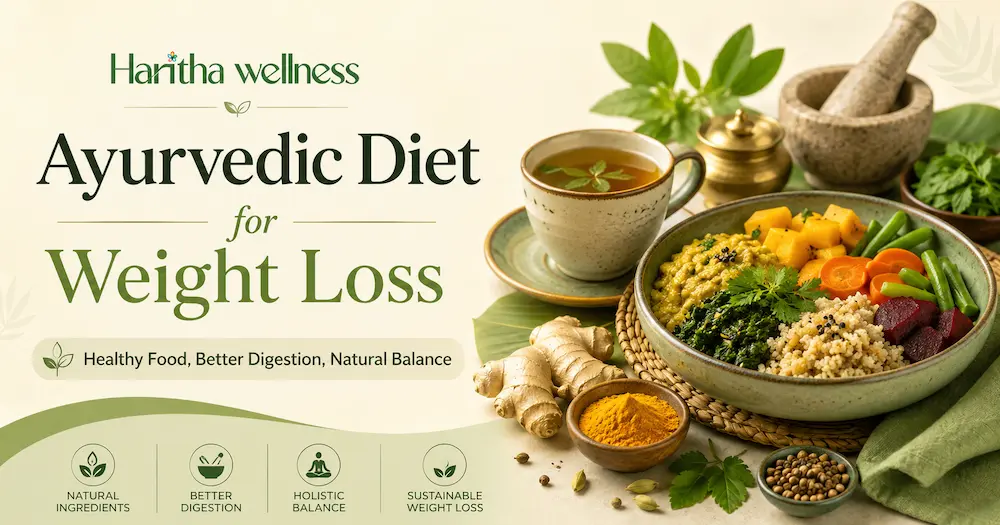
An Ayurvedic diet for weight loss focuses on supporting digestion, balancing Kapha according to Ayurvedic principles and developing sustainable food and lifestyle habits. It generally favours warm, light and freshly prepared meals alongside regular movement, adequate sleep and stress management – not crash diets, extreme fasting or guaranteed rapid weight loss.

Most weight-loss advice focuses mainly on calories, exercise and food restriction. However, Ayurveda offers a much more comprehensive and traditional perspective, as it also takes into account issues of digestion and body constitution, meal timing and sleep, stress and lifestyle.
In Ayurveda, weight gain can occur due to impaired digestion, lack of exercise and heightened qualities of heaviness and sluggishness corresponding to the characteristics of Kapha dosha. In addition to those factors affecting weight, specific medical conditions, medications, hormones, sleeping habits, psychological factors etc. should also be taken into consideration.
This is the reason why an Ayurvedic weight loss program is most effective if it is appointed according to each person’s needs rather than based on some random diet on the internet.
At Haritha Wellness, weight-management programs are planned after reviewing the individual’s health history, digestion, food habits, activity levels, sleep and wellness goals.
What Is an Ayurvedic Diet for Weight Loss?
An Ayurvedic diet for weight loss is based on the principles of the Ayurvedic approach to food which involve digestion, properties of ingredients, time of consumption, etc.
Ayurveda does not merely concentrate on the calorie value of food but also takes into account properties of meals, whether the food is difficult to digest or it is in line with the body constitution and the reason it is consumed.
The plan may emphasise warm, freshly cooked food, suitable portions and regular meal times. It should still provide adequate nutrition and should not become an excuse for extreme restriction.
- Is the meal fresh or heavily processed?
- Is it light or difficult to digest?
- Is it suitable for the person’s constitution?
- Is the person eating because of hunger, stress or habit?
- Are meals taken at regular times?
- Is dinner too heavy or too close to bedtime?
- Does the person feel energetic or sluggish after eating?
The Kapha Diet: What to Eat and What to Limit
A Kapha-balancing diet traditionally favours foods that are light, warm and freshly prepared while limiting meals that are very heavy, oily, cold or highly processed.
According to Ayurveda, there are six different tastes: sweet, sour, salty, pungent, bitter, and astringent. In a traditional Kapha reducing approach, pungent, bitter, and astringent tastes may be emphasized while sweet, sour, and salty foods may be reduced excessively.
Kapha-Balancing Food Guide
| Foods to favour | Foods to limit |
| Freshly cooked vegetables | Deep fried food |
| Leafy greens | Heavy creamy dishes |
| Moong dal and suitable pulses | Excess sweets |
| Light soups | Sugary drinks |
| Moderate portions of whole grains | Refined bakery foods |
| Ginger and mild spices, when suitable | Excess salt |
| Bitter and astringent vegetables | Packaged snacks |
| Warm, simple meals | Cold or frozen meals |
| Fresh herbs | Heavy late-night dinners |
| Seasonal food | Frequent processed food |
This table is a starting guide, not a strict prescription. People with acidity, ulcers, diabetes, kidney disease, food allergies, pregnancy or other health conditions may require a different plan.
Ayurvedic Weight-Loss Diet Chart: A Sample Day
This sample meal plan is for general education. It should be adjusted according to individual medical and nutritional needs.
Early morning
Warm or room-temperature water according to comfort and medical advice.
Breakfast
Vegetable poha, moong dal chilla with cooked vegetables, light millet porridge or a steamed vegetable preparation.
Mid-morning
A suitable seasonal fruit, when advised.
Lunch
Cooked vegetables, moong dal or another suitable pulse, a moderate portion of rice or roti, and a light soup or salad depending on digestion.
Evening
A mild cumin-coriander-fennel drink or another doctor-approved beverage without excess sugar.
Dinner
Vegetable soup, soft khichdi, cooked vegetables or a small portion of a suitable grain. Keep dinner simpler and lighter than lunch.
People with diabetes, kidney disease, digestive disorders or regular medication use should follow a plan created by a qualified professional.
5 Ayurvedic Weight-Loss Habits to Practise
Begin the Day With a Simple Routine
Warm water may feel soothing and can be part of a calm morning routine. It should not be presented as a drink that melts fat or automatically removes toxins. Choose a comfortable temperature and avoid forcing excessive water.
Keep Lunch More Substantial Than Dinner
Traditional Ayurvedic routines often recommend eating the main meal during the daytime and keeping dinner lighter. A practical approach is to finish dinner two or three hours before sleep whenever your schedule and medical needs allow.
Eat According to Genuine Hunger
Try to recognise the difference between physical hunger and eating triggered by boredom, stress or habit. Avoid long periods of restriction that later lead to overeating.
Leave Space Between Meals
Constant snacking can make it difficult to understand natural hunger cues. However, people with diabetes, pregnancy or specific medical conditions may need planned snacks. Follow professional advice instead of applying a rigid rule.
Eat Without Distraction
Eating slowly and without constant screen use may help you notice fullness and portion size more clearly. Take time to chew food and pay attention to how the meal makes you feel.
How Stress Can Affect Weight Management
Stress can influence appetite, sleep, energy, movement and food choices. Some people eat more when anxious or emotionally overwhelmed, while others skip meals and overeat later.
- Meditation
- Gentle breathing practices
- Yoga
- Walking in nature
- Regular sleep
- Eating without distractions
- Recognising emotional-eating triggers
- Professional counselling when needed
Stress management can support a healthier lifestyle, but it should not replace medical or psychological care.
Panchakarma and Ayurvedic Weight Management
Panchakarma is a structured group of traditional Ayurvedic procedures. It may be included within a supervised wellness program after proper assessment, but it should not be promoted as a guaranteed or rapid weight-loss treatment.
Udvartana
Udvartana is an active massage done with herbal powder and involves moving hands above the body. This is supposed to help with exfoliating, stimulating and sensing the body. However, this massage should not be considered as effective in dissolving body fat. Instead, the blend of herbs, pressure and frequency must be selected according to the client.
Virechana
Virechana is a cleansing Ayurvedic technique done under supervision only after thorough evaluation and training. This assessment allows the practitioner to make a conclusion about whether the procedure is right for the person in terms of their strength, digestion, medical history and programme of treatment. It is not something that can be performed at home.
Basti
Basti is a specific Ayurvedic method involving the introduction of specific mixtures in the rectum according to the professional recommendation. It may vary significantly in terms of ingredients, time of administration and type of substance depending on the patient.
Can Panchakarma Detox the Body for Weight Loss?
While the term detox is much on demand in wellness marketing, it has various meanings. According to Ayurveda and its practice, Panchakarma is usually described with the help of the terms ‘dosha balance’ and ‘cleansing.’ Practically speaking, Panchakarma is a traditional Ayurvedic procedure performed under supervision and consisting of a range of procedures and dietary recommendations as well as rest and lifestyle recommendations.
When Home Habits Are Not Enough
Maintaining a routine at home can be difficult when work, stress and family responsibilities interfere. A structured Ayurvedic weight-loss retreat may offer:
- A regular daily schedule
- Personalised consultation
- Planned meals
- Supervised therapies
- Yoga and meditation
- Lifestyle counselling
- Rest and nature based activities
- Progress discussions
- Guidance for returning home
A retreat should provide structure and education, not promise a fixed number of kilograms lost.
Weight Loss and Rejuvenation at Haritha Wellness
Haritha Wellness offers a residential Weight Loss and Rejuvenation Program near Sadashivpet, Telangana. Depending on the individual assessment, the program may bring together:
- Ayurvedic consultation
- Therapeutic food
- Yoga and meditation
- Naturopathy support
- Lifestyle counselling
- Doctor-guided therapies
- Rest and mindful routines
- Guidance for maintaining habits at home
The exact program should be decided after reviewing health history, medicines, digestion, activity and personal goals. Learn more about the Weight Loss and Rejuvenation Program and Panchakarma Therapy.
Personalised Therapeutic Food can support healthier meal routines, while Yoga and Meditation may support movement, stress management and mindful daily habits.
For complete Panchakarma guidance, read about the benefits of Panchakarma therapy, learn how to prepare for Panchakarma treatment, and follow the recommended diet after Panchakarma treatment for proper preparation and recovery.
Who Should Take Extra Care?
Do not begin restrictive diets, intensive fasting, herbal supplements or Panchakarma procedures without professional advice when you:
- Are pregnant or breastfeeding
- Have diabetes
- Have kidney or liver disease
- Have an eating disorder or history of disordered eating
- Take regular medicines
- Are recovering from surgery
- Have severe weakness
- Have uncontrolled blood pressure
- Have persistent digestive symptoms
- Are a child or older adult with complex health needs
Never stop prescribed medicines or delay necessary medical care because of an online diet or wellness program.
Conclusion
An Ayurvedic diet for weight loss is not based on starvation, extreme restriction or short-term detox trends. It focuses on developing healthier food choices, regular movement, adequate sleep, stress management and a routine that can be maintained over time.
Traditional Ayurvedic guidance may include Kapha-balancing food, yoga, therapeutic nutrition and supervised therapies. However, every program should be personalised according to the individual’s health, digestion, medicines and nutritional needs.
Start Your Weight Management Journey
Explore the Weight Loss and Rejuvenation Program at Haritha Wellness or book a consultation for personalised guidance.
Frequently Asked Questions
What is an Ayurvedic diet for weight loss?
An Ayurvedic diet for weight loss is a personalised approach that considers digestion, food quality, meal timing, body constitution and daily habits. It usually favours warm, light and freshly cooked meals. It should provide adequate nutrition and should not rely on crash dieting, extreme fasting or guaranteed results.
Which foods should I limit on a Kapha diet?
A Kapha-balancing plan may limit excessive fried, oily, cold, very sweet and highly processed foods. Examples include sugary drinks, packaged snacks, bakery products and heavy late-night meals. Restrictions should be adjusted according to digestion, medical conditions and nutritional needs.
Does an Ayurvedic weight-loss diet require calorie counting?
Ayurveda traditionally focuses more on digestion, portions, food qualities and individual constitution than calorie counting. However, total food intake still matters. Healthy weight management requires appropriate portions, balanced nutrition, regular activity and consideration of underlying medical conditions.
Is Udvartana useful for weight management?
Udvartana is a traditional herbal powder massage that may support exfoliation, stimulation and body awareness as part of a broader wellness routine. It should not be described as melting fat. Suitability depends on the person’s skin, circulation and health condition.
Can Panchakarma help me lose weight?
Panchakarma may be included in a supervised Ayurvedic wellness program, but it does not guarantee weight loss. Long-term results depend on food habits, activity, sleep, stress, medical health and consistency. Procedures such as Virechana and Basti require professional assessment and supervision.
Is Basti safe for weight loss?
Basti is a specialised Ayurvedic procedure, not a home weight-loss remedy. It should only be performed under trained suervision after assessing the individual’s health and suitability. It may be inappropriate during pregnancy, acute illness or certain medical conditions.
How is an Ayurvedic weight-loss retreat different from following a diet at home?
A retreat provides a structured schedule, supervised therapies, planned meals, yoga, lifestyle guidance and regular professional support. Home habits can still be valuable, but a retreat may help people who need more structure. No responsible retreat should promise a fixed amount of weight loss.
Is Ayurvedic weight management safe for everyone?
No single diet, herb or therapy is appropriate for everyone. People with chronic illnesses, pregnancy, medication use, severe weakness or eating disorders require personalised care. Never stop prescribed medicines or begin restrictive diets and strong herbal products without professional advice.
Is there an Ayurvedic weight-loss centre near Hyderabad?
Haritha Wellness offers a residential Weight Loss and Rejuvenation Program near Sadashivpet, Telangana, within reach of Hyderabad. The program may include personalised food, Ayurveda, yoga, naturopathy and lifestyle guidance after an individual consultation.