
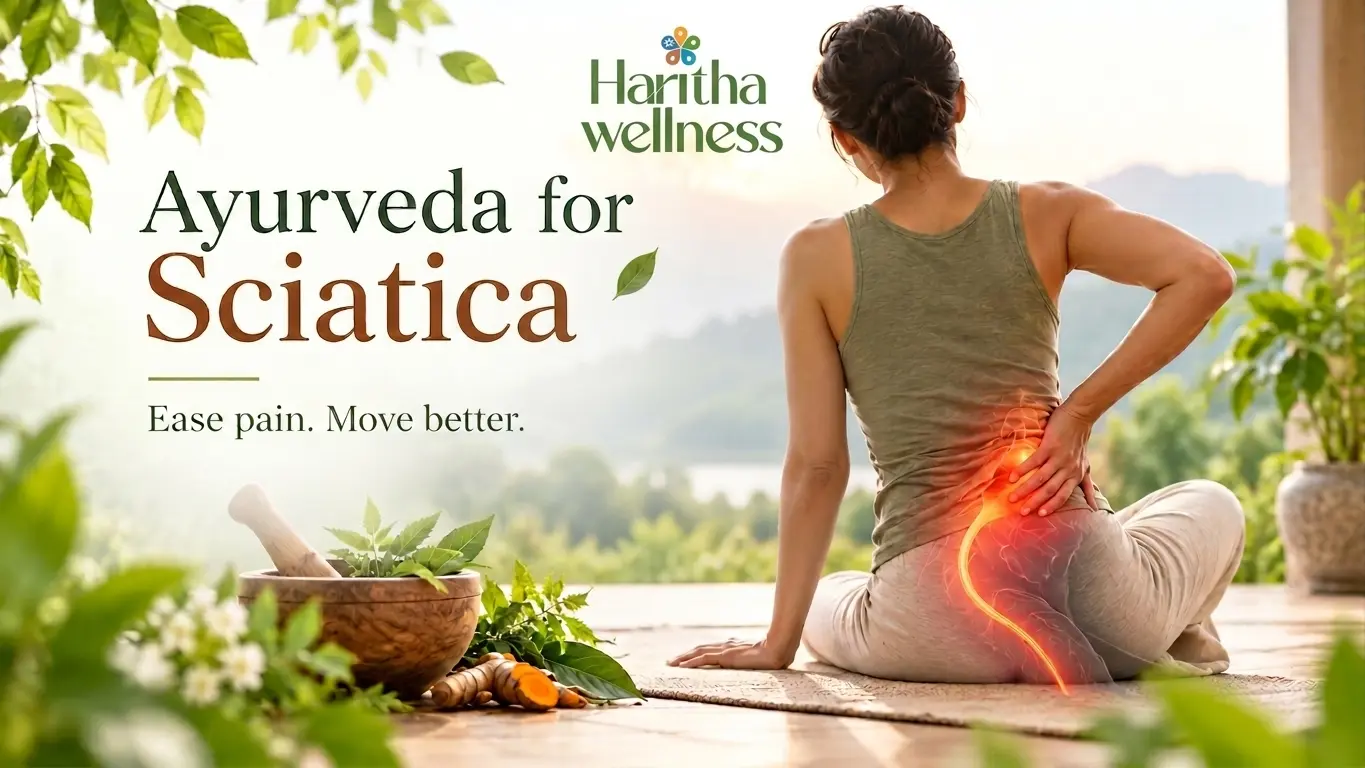
The application of Ayurveda for sciatica can be considered in case of radiating pain from the lower back that goes down one or both legs, typically accompanied by numbness, tingling, and weakness.
Sciatica in Ayurveda is known as Gridhrasi, and it is recommended to use Ayurvedic treatment as an auxiliary therapy along with the main course of recovery. To treat sciatica correctly, it is necessary to consider which structures are affected and what symptoms they cause.
Sciatica can make even the most ordinary activities difficult or painful. Sitting at a desk for a long time at work may become hard. Getting out of the car can be like wading up to your knees in ice water. Some patients feel a burning or an electric pain while others are more likely to feel a dullness or a tingling or numbness in one or both legs.
That is why the first step should be focusing on understanding the problem, instead of jumping right to treatments.
When Back Pain Starts Travelling Down the Leg
Sciatica is not simply another name for lower back pain.
The sciatic nerve runs from the lower back through the buttock and into the leg. Irritation of one or more roots of this nerve can lead to pain at the back of the leg.
The most common complaint is pain coming from the lower back or buttock into the thigh or leg, sometimes with tingling, numbness and muscle weakness. Sciatica often takes place on one side only and can vary from person to person.
A disc problem is one possible reason for sciatic symptoms. Other causes can include narrowing around nerves, age related changes in the spine or other conditions that put pressure on a nerve.
The important point is that the painful leg may not be where the problem begins.
How Ayurveda Understands Sciatica
In Ayurveda, sciatica is traditionally described as Gridhrasi.
Gridhrasi is predominantly linked to Vata due to its association with the qualities of movement and the role it plays in the nervous system. Classical texts describe burning pain and stiffness with restricted mobility. Some Ayurvedic sources make a distinction between Vata dominant and Vata Kapha presentations.
This should not be substituted for appropriate medical evaluation.
Someone with a disc condition affecting the nerve root, spinal stenosis or another neurological problem still requires the underlying pathology to be investigated.
The strength of an Ayurvedic consultation is the individualisation of assessment and treatment. Rather than grouping different presentations of sciatica together, an Ayurvedic practitioner would aim to assess the patient’s presenting symptoms alongside their physiological capabilities, lifestyle and any concomitant medical conditions.
What Can Ayurvedic Care for Sciatica Include?
An Ayurvedic treatment for sciatica should not be based on one standard therapy for everybody.
Depending on the patient’s assessment, Ayurvedic treatment may involve external oil-based therapies, heat-based treatments, lifestyle advice, diet and selected traditional procedures.
Snehana, Swedana, Basti, localized oil treatments are commonly described in the Ayurvedic literature and modern Ayurveda texts around Gridhrasi.
Does not mean every patient that presents leg discomfort needs all these procedures.
A person with mild symptoms and good functionality would require a different approach than an individual presenting serious weakness or diagnosed with a spine condition.
At Haritha Wellness, the purpose of assessment is to choose care according to the person rather than offering the same package for every case.
Explore Ayurvedic Treatments at Haritha Wellness
Movement Is an Important Part of Sciatica Recovery
When sciatic pain is intense, many people are frightened to move.
They often require some temporary modification of their activities, but this can also lead to deconditioning and decreased confidence in movement.
Exercise-based rehabilitation may target strengthening, stretching, control and function. Clinical management guidelines for sciatica recommend exercise and physiotherapy as conservative management strategies.
This is where physiotherapy for sciatica can have an important role.
A physiotherapist can assess which movements increase symptoms, whether strength has changed and how gradually returning to normal activity can be planned.
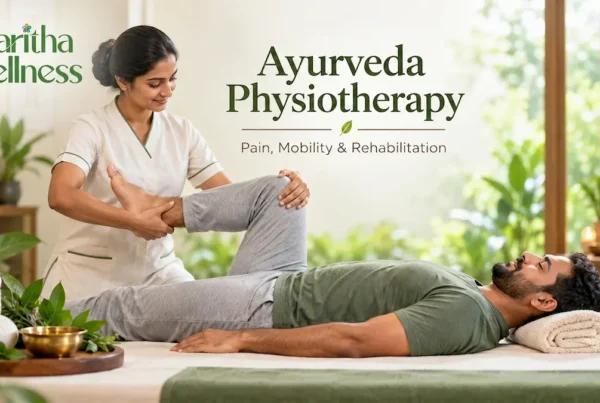
Haritha Wellness already combines Ayurveda and physiotherapy within its broader pain and mobility approach.
Physiotherapy at Haritha Wellness
What About Kati Basti and Basti for Sciatica?
People researching sciatica treatment in Ayurveda often come across Kati Basti and Basti.
They are not the same therapy.
Kati Basti is an external Ayurvedic procedure in which warm medicated oil is retained over the lower back for a selected period.
Basti in classic Ayurveda is a different therapeutic procedure traditionally assigned special importance in Vata related conditions.
Both are often found in Ayurvedic approaches to Gridhrasi (Sciatica).
However, treatment choice should be made on the basis of an Ayurvedic assessment. Simply reading that a therapy is commonly used for sciatica does not mean that it is automatically suitable for every individual experiencing leg pain.
Can Yoga Help With Sciatic Pain?
Yoga may be useful for some people when movements are selected according to their symptoms and physical ability.
The aim should not be to perform difficult poses while the nerve is irritated.
Gentle mobility, breathing and appropriate exercises can be beneficial supplements to rehabilitation. Advice about exercise for sciatica also covers a variety of stretching, strengthening and mind-body movements, based on individual requirements.
Individuals with severely painful symptoms, increased numbness or weakness should have these symptoms evaluated prior to commencing a general online yoga program.
Haritha Wellness provides personalised Yoga and Meditation support that can be considered as part of a wider wellness plan.
Yoga and Meditation at Haritha Wellness
Sitting All Day Can Make Recovery Harder
Long working hours in sitting positions are often linked with aggravation of sciatic pain in certain patients.
This does not imply that everyone must maintain good posture at all times.
A more pragmatic strategy is to avoid prolonged sitting in the same position.
Alternating positions and taking breaks to stretch and strengthen the muscles will probably have a far more effective role than attempting to sit upright as it is supposed to be done.
If one has to work sitting for extended periods of time or driving a car, this must be mentioned at the assessment and examination stage as it may impact the symptom pattern during the day.
When Sciatica Needs Medical Attention First
Most cases of sciatic pain are not an emergency. However, there are particular symptoms that should not be treated solely by wellness therapies.
Medical attention is required in the case of new onset of bladder or bowel problems associated with sciatica, numbness around the genitals or anal region, increasing weakness in both legs, or significant bilateral pain or symptoms. Sciatica with these additional symptoms may indicate dangerous nerve compression that requires immediate treatment.
Gradual development of weakness on one side and numbness or pain that does not stop and grows worse should also be evaluated by medical professionals.
Recognising these warning signs is an important part of responsible sciatica pain treatment in Ayurveda.
Complementary care should support appropriate medical care, not delay it.
Sciatica Treatment in Hyderabad: What Should You Look For?
People searching for sciatica treatment in Hyderabad may find Ayurveda, physiotherapy, acupuncture, pain management and many other options.
Rather than relying on a potentially successful therapy for swift pain alleviation, evaluate if the issue is correctly diagnosed.
There are diverse origins of sciatica pain, and an effective medical strategy should contemplate the location and extension of discomfort, additional manifestations such as paresthesia or motor impairment, particular provoking activities and the availability of diagnostic tests or imaging performed previously.
Haritha Wellness is located near Sadashivpet in Telangana, with a corporate office in Jubilee Hills, Hyderabad. Its wellness model includes Ayurveda, physiotherapy, hydrotherapy, acupuncture, yoga and nutrition.
This allows different aspects of pain and mobility to be considered without assuming that every person needs every available therapy.
How Haritha Wellness Approaches Sciatica Care
At Haritha Wellness, care begins by understanding how the symptoms affect everyday life.
Can you sit comfortably?
Does pain travel below the knee?
Is there tingling in the foot?
Has walking become difficult?
Is weakness developing?
Has the problem already been medically diagnosed?
These details help guide the next step.
Ayurvedic care may be considered for traditional and lifestyle support, while physiotherapy can address movement, strength and rehabilitation. Other therapies may be considered only when they have a clear role.
The aim is not simply to reduce today’s pain.
It is to support safer movement and help the person return to everyday activities with greater confidence.
Final Thoughts
Ayurveda for sciatica should begin with understanding the person, not simply selecting an oil, herb or therapy because it is commonly associated with Gridhrasi.
Sciatica can involve pain, tingling, numbness or weakness travelling from the lower back into the leg. Because these symptoms can have different causes, treatment needs to be personalised.
Ayurvedic care may support the wider wellness plan, while appropriate movement and physiotherapy can help address mobility and physical function.
At Haritha Wellness, the goal is to understand how the symptoms are affecting daily life and then select suitable support accordingly.
Book a consultation with Haritha Wellness
Frequently Asked Questions
Is sciatica the same as lower back pain?
No. Lower back pain may stay around the back, while sciatica usually involves irritation of a nerve and commonly causes pain that travels into the buttock and leg.
What is Gridhrasi in Ayurveda?
Gridhrasi is the traditional Ayurvedic term commonly associated with sciatica. It is mainly described as a Vata related condition involving pain, stiffness and difficulty with movement.
Can Ayurveda permanently cure sciatica?
It would not be appropriate to promise a permanent cure. Sciatica has different causes. Ayurvedic care may be considered as supportive management, while the underlying cause, movement needs and any neurological symptoms should also be assessed.
Can massage help sciatica?
Some people may find selected manual or oil based therapies comfortable, but they are not suitable for every cause of sciatic pain. Severe pain, numbness or weakness should be assessed before treatment.
Is walking good when you have sciatica?
Gentle activity can be useful for many people, but the right amount depends on the symptoms. If walking causes rapidly increasing pain, numbness or weakness, professional assessment is advisable.
Where can I find Ayurveda for sciatica near Hyderabad?
Haritha Wellness near Sadashivpet, Telangana offers Ayurveda together with physiotherapy and other supportive wellness services. An assessment can help determine which approach may be suitable based on the person’s symptoms and mobility needs.