
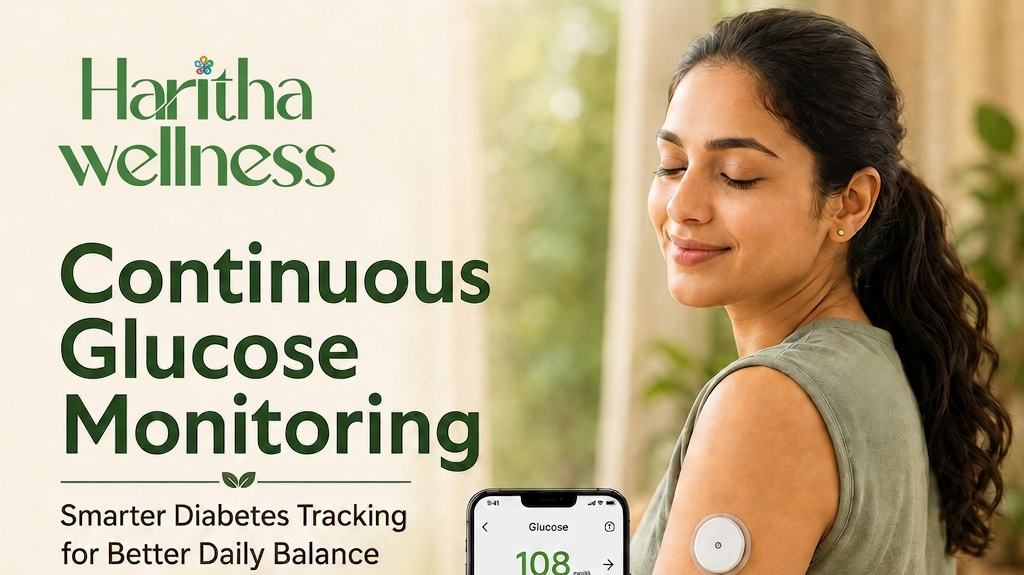
Continuous glucose monitoring (CGM) is a method of tracking glucose levels throughout the day and night using a small wearable sensor. A continuous blood glucose monitor provides repeated readings and trend information that can help users understand how glucose changes after meals, activity, sleep, and other daily events. It is a monitoring tool and should be used as part of an individual diabetes-management plan under appropriate healthcare guidance.
Diabetes management often involves checking glucose levels at specific times during the day. A fasting reading may show what is happening in the morning, while a post-meal reading provides another snapshot later in the day.
However, glucose can rise and fall many times between these individual readings.
This is where continuous glucose monitoring can provide additional information.
A CGM collects glucose data repeatedly throughout the day and night and helps users and healthcare professionals understand patterns rather than looking only at isolated readings.
People may also refer to this technology as a continuous blood glucose monitor or continuous blood sugar monitor. While these phrases are often used interchangeably in everyday searches, the common medical term is continuous glucose monitoring, or CGM.
CGM does not treat diabetes by itself. Its main purpose is to provide information that may support more informed conversations about food, activity, medicines, sleep and daily routines.
What Is Continuous Glucose Monitoring?
Continuous glucose monitoring uses a small sensor worn on the body to check glucose levels repeatedly, day and night, instead of relying on single readings taken here and there. The sensor sits just under the skin and measures glucose in the interstitial fluid the fluid between your cells, not blood directly and sends those readings to a phone, receiver, insulin pump, or another connected device depending on the system.
What you get out of that is a much fuller picture than any one reading gives you:
- Your current glucose level
- Whether it’s rising or falling
- Patterns across the day
- What’s happening overnight
- Alerts when you go too high or too low
- How much time you’re spending in your target range
Put together, that’s the real value seeing how glucose actually behaves over time, not just where it happens to be at one moment.
What Is a Continuous Blood Glucose Monitor?
A continuous blood glucose monitor is a wearable monitoring system that estimates glucose repeatedly throughout the day.
Unlike a traditional glucose meter, which gives one blood glucose reading at a specific moment, CGM technology provides a stream of readings and trend information.
For example, a person may see a glucose reading of 120 mg/dL.
With a normal glucose meter, that is simply one number.
With CGM, the person may also see whether that reading has been stable, whether glucose has been rising for the last hour or whether it is starting to fall.
That additional context is one of the most useful features of continuous monitoring.
How Does a Continuous Blood Sugar Monitor Work?
A continuous blood sugar monitor usually has three main parts: a sensor, a communication system and a display device.
The sensor is placed on or just under the skin and measures glucose in interstitial fluid.
The information is then transmitted to a compatible smartphone, receiver or connected device.
Many CGM systems display the current glucose estimate along with graphs or arrows showing the direction of change.
The basic process is:
- A small sensor is placed on the body.
- The sensor collects glucose information regularly.
- Data is transmitted to a compatible device.
- The user can view readings and glucose trends.
- Some devices provide alerts for readings outside configured limits.
The exact features vary between different CGM systems.
CGM vs Finger-Prick Blood Glucose Testing
Traditional blood glucose testing and continuous glucose monitoring provide different types of information.
A finger-prick test provides a glucose reading at one particular moment.
A CGM provides repeated readings throughout the day.
Imagine someone checks their glucose at 8:00 AM and again at 1:00 PM.
Those tests provide two useful numbers, but they do not show what happened during the five hours between them.
A CGM may show whether glucose increased after breakfast, came down after a walk and rose again after lunch.
This wider view can help identify patterns.
However, CGM does not always eliminate the need for finger-prick testing. Depending on the device, symptoms and individual treatment plan, confirmatory testing may still sometimes be necessary.
What Information Does CGM Provide?
A Continuous Glucose Monitor (CGM) can offer a lot more than just one glucose measurement.
Users are able to see the current glucose levels as well as trend arrows, daily graphs, overnight trends, alerts, and summary statements depending on the kind of system initially used.
However, that’s not the most useful information one can take out of a CGM; repeated patterns tend to provide better insights compared to just acting on every glucose reading.
For instance, the individual may discover that their glucose tends to rise after a certain liturgy or fall while doing particular activities.
The patient may then discuss such patterns with their medical professional.
What Is Time in Range?
One important measurement commonly used with continuous glucose monitoring is Time in Range, often abbreviated as TIR.
Time in Range is the term used to highlight the proportion of time spent by glucose in subjection to the level of glucose allotment.
Time in Range goes beyond the average glucose value in order to understand how often glucose stays in the desired range.
Two different individuals may possess similar values of glucose, while their daily patterns may not remain the same.
For instance, one may yield glucose readings that stay fairly constant, while the other person’s glucose readings may fluctuate constantly.
CGM can help reveal these differences.
The appropriate glucose target range should be determined individually with the person’s healthcare team.
What Are CGM Trend Arrows?
Various CGM systems minimally display arrows that indicate whether glucose is on the increase, decrease, or stable.
For instance, in certain systems, individuals can see an upward arrow if glucose is increasing while a downward arrow if it is decreasing.
Thus, the same glucose level can be interpreted differently based on the trend.
A reading of 110 mg/dL that is stable is different from a reading of 110 mg/dL that is rapidly decreasing.
Trend information can therefore provide useful context.
However, medication decisions should not be made simply by looking at arrows without proper training and medical guidance.
Benefits of Continuous Glucose Monitoring
The main advantage of continuous glucose monitoring is the amount of information it provides about glucose patterns throughout the day and night.
Rather than seeing only a few isolated readings, users can observe how glucose changes in response to everyday activities.
Helps Identify Glucose Patterns
CGM may help identify repeated high or low glucose patterns.
For example, a person may notice that glucose rises at a similar time every afternoon or decreases during certain periods of physical activity.
Recognising these patterns may support more useful conversations with healthcare professionals.
Provides Information After Meals
Meals can affect glucose differently depending on portion size, carbohydrate content, protein, fat, fibre, medicines and activity.
A continuous blood glucose monitor may help users see how glucose changes after eating and how long those changes last.
However, a single glucose response should not be used to label a food as universally good or bad.
Detailed food guidance belongs in a separate diabetes diet article rather than being explained fully here.
Shows Overnight Glucose Trends
Because CGM continues collecting information during sleep, it may reveal overnight glucose patterns that would otherwise be difficult to detect.
Some people may discover repeated overnight highs or lows.
These patterns should be reviewed with qualified healthcare professionals rather than being self-diagnosed.
A separate Haritha Wellness article can explain morning blood sugar spikes in greater detail.
May Provide High and Low Glucose Alerts
The CGM technology has been designed is designed provide notifications to the patients when glucose exceeds appropriate levels. Thus, these notifications can help people, who encounter glucose variations. One should adjust the notifications according to type of diabetes and therapy process.
Helps Build Lifestyle Awareness
A continuous blood sugar monitor may help people understand how glucose patterns relate to everyday habits such as:
- Meal timing
- Physical activity
- Sleep
- Medicines
- Work schedules
- Stress
- Illness
- Daily routines
The goal should not be to chase a perfectly flat glucose line.
Instead, CGM should help identify meaningful patterns that can be discussed with healthcare professionals.
Who May Benefit From Continuous Glucose Monitoring?
CGM can be beneficial for various patients, based on their diabetes condition, medication history, glucose-control requirements, and unique situations.
The use of CGM arises particularly with patients using insulin. This is because having the glucose readings helps people decide what medication is required.
Nevertheless, some patients not using insulin may also benefit from CGM since it is considered to be beneficial.
Deciding whether a person needs continuous glucose monitoring should be made on a case-by-case basis.
Factors may include:
- Current diabetes treatment
- History of low glucose
- History of high glucose
- Ability to use the device
- Lifestyle
- Cost
- Personal preferences
- Whether the information is likely to improve management
Can People Who Do Not Use Insulin Use CGM?
Yes, some people who do not use insulin may still use continuous glucose monitoring.
For example, temporary CGM may sometimes help people better understand how glucose responds to meals, physical activity and daily routines.
However, not every person with diabetes requires continuous monitoring.
The main question is whether CGM data will provide information that is useful for the person’s individual health plan.
What Is Professional CGM?
Professional CGM is another form of glucose monitoring that may be used for a limited period under healthcare supervision.
Instead of continuously checking the data themselves, some users may wear the sensor for several days and later review the information with a healthcare professional.
This can help identify glucose patterns that might not be obvious from occasional finger-prick tests.
The exact process depends on the CGM system and healthcare provider.
Can CGM Help Understand Food Responses?
CGM may help users see how glucose changes after different meals.
For example, a person may notice that some meals produce a larger or longer glucose rise than others.
However, food responses should always be interpreted in context.
Important factors include:
- Portion size
- Carbohydrate content
- Protein
- Fat
- Fibre
- Meal timing
- Medicines
- Physical activity
Rather than making decisions based on one reading, it is generally more useful to observe repeated patterns.
For personalised food guidance, Haritha Wellness’s Therapeutic Food approach may be considered as part of broader lifestyle support.
Can Exercise Affect CGM Readings?
Physical activity can affect glucose levels, although the response varies between individuals.
Some people may notice glucose falling during or after exercise, while certain types of activity may produce different short-term responses.
People taking insulin or glucose-lowering medicines may require additional planning around exercise, meals and monitoring.
CGM can help show personal patterns, but exercise decisions should also consider the person’s general health and treatment plan.
CGM and Sleep
Sleep is another area where continuous glucose monitoring may provide useful information.
Because the sensor continues collecting readings overnight, users may notice patterns they would otherwise miss.
However, unusual overnight readings should not automatically be interpreted without considering other factors such as:
- Medicines
- Evening meals
- Device accuracy
- Sleep duration
- Illness
- Physical activity
Repeated abnormal patterns should be discussed with the healthcare professional responsible for diabetes care.
CGM and Stress
Stress may be associated with changes in glucose levels in some people.
A CGM can help show whether glucose patterns appear different during stressful periods.
However, one stressful event and one unusual reading do not prove that stress caused the change.
Haritha Wellness has a separate planned article on stress and blood sugar, so this topic should remain brief here to avoid keyword cannibalisation.
What Are the Limitations of Continuous Glucose Monitoring?
CGM provides useful information, but it is not perfect.
Because most CGM systems estimate glucose from interstitial fluid rather than directly testing a blood sample every time, the reading may sometimes differ slightly from a blood glucose meter.
A delay may be more noticeable when glucose is changing quickly.
Other limitations can include:
- Skin irritation
- Sensor problems
- Device cost
- Connectivity issues
- Too many alerts
- Information overload
- Anxiety about frequent readings
Some people may become overly focused on every small rise and fall.
The purpose of CGM is to help identify useful patterns, not to create stress around every reading.
When Should a CGM Reading Be Checked With a Blood Glucose Meter?
Sometimes a person may feel symptoms that do not match the CGM reading.
In these situations, depending on the device and the person’s treatment plan, a finger-prick blood glucose check may be recommended.
Users should follow the instructions provided for their CGM system and the advice of their healthcare professionals.
Symptoms should not be ignored simply because the CGM shows a normal-looking number.
Does CGM Replace HbA1c Testing?
No.
CGM and HbA1c provide different types of information.
HbA1c reflects average glucose exposure over a longer period.
CGM provides detailed day-to-day and hour-to-hour glucose information.
Both can provide useful information depending on the individual’s diabetes-management plan.
Regular laboratory testing and medical follow-up should continue as recommended.
Can CGM Replace Diabetes Medicine?
No.
A continuous blood glucose monitor measures glucose. It does not treat diabetes.
CGM information may help healthcare professionals understand patterns and make treatment decisions, but medicines or insulin should not be stopped, reduced or increased without proper medical guidance.
The same principle applies when someone is also using Ayurveda, dietary changes, yoga or other wellness approaches.
How Does CGM Fit With Ayurveda and Lifestyle Care?
Continuous glucose monitoring and Ayurveda come from different healthcare frameworks.
CGM provides objective information about glucose trends.
Ayurveda traditionally considers factors such as food habits, digestion, sleep, activity, stress and daily routines.
When a person is using complementary wellness practices alongside established diabetes care, CGM data may provide useful information about how glucose behaves over time.
However, improved readings should not be used to claim that an Ayurvedic therapy has cured or permanently reversed diabetes.
For a broader explanation of Ayurvedic lifestyle support, read our Ayurveda for Diabetes guide.
CGM and Panchakarma
People with diabetes who are considering Panchakarma may require additional glucose awareness because food timing, physical activity and routine can change during a structured wellness program.
In some situations, continuous monitoring may provide additional information.
However, CGM does not automatically make Panchakarma suitable for everyone.
Panchakarma suitability depends on medical history, medicines, glucose control and professional assessment.
For detailed information, read our separate article on Panchakarma for Diabetes.
How to Read CGM Data Without Becoming Overwhelmed
Seeing many readings throughout the day can feel confusing at first.
Instead of focusing on every small movement, look for repeated patterns.
Useful questions may include:
- Does glucose repeatedly rise at the same time?
- Are low readings occurring regularly?
- What happens after similar meals?
- What happens on active days?
- Are there repeated overnight patterns?
- Are certain routines associated with more stable readings?
These observations can be discussed during a healthcare consultation.
Avoid making major medication changes based only on individual CGM readings.
Continuous Glucose Monitoring Near Hyderabad
People searching for continuous glucose monitoring near Hyderabad should focus not only on obtaining a sensor but also on understanding the information it provides.
CGM data is most useful when reviewed in the context of the person’s:
- Medical history
- Medicines
- Food habits
- Physical activity
- Sleep
- Existing health conditions
- Overall diabetes-management plan
Haritha Wellness near Sadashivpet, Telangana, provides wellness consultations that may include lifestyle guidance, Therapeutic Food, yoga and Ayurvedic support alongside the person’s existing medical care.
Any decisions relating to insulin, medicines or clinical diabetes treatment should remain under appropriately qualified medical supervision.
How to Prepare for a CGM Consultation
Before discussing continuous glucose monitoring with a healthcare professional, it may help to bring relevant health information.
Useful information may include:
- Recent fasting glucose readings
- Post-meal glucose readings
- HbA1c reports
- Current medicines
- Insulin details, if applicable
- Previous low-glucose episodes
- Typical meal timings
- Exercise routine
- Sleep patterns
- Existing health conditions
This helps healthcare professionals determine whether CGM may provide useful additional information.
Conclusion
Continuous glucose monitoring can provide a more detailed picture of how glucose changes throughout the day and night.
A continuous blood glucose monitor or continuous blood sugar monitor may help users see trends related to meals, physical activity, sleep, medicines and daily routines.
The main value of CGM is not simply the number displayed on the screen. It is the ability to identify repeated patterns and use that information in discussions with qualified healthcare professionals.
CGM remains a monitoring technology rather than a diabetes treatment.
It should not replace prescribed medicines, insulin, laboratory tests or regular medical follow-up.
Book a free consultation with Haritha Wellness for personalised wellness guidance that considers your existing health condition, lifestyle, food habits and current diabetes care.
Frequently Asked Questions
What is continuous glucose monitoring?
Continuous glucose monitoring is a method of tracking glucose repeatedly throughout the day and night using a wearable sensor. It provides current readings and trend information that can help users and healthcare professionals understand glucose patterns over time.
What is a continuous blood glucose monitor?
A continuous blood glucose monitor is a wearable glucose-monitoring system that estimates glucose levels regularly and sends the information to a compatible device. It provides more detailed trend information than occasional glucose testing alone.
Is a continuous blood sugar monitor the same as CGM?
The term continuous blood sugar monitor is commonly used by people searching for CGM devices. CGM stands for continuous glucose monitoring and generally refers to wearable systems that track glucose levels repeatedly throughout the day and night.
How does a continuous blood sugar monitor work?
A continuous blood sugar monitor uses a wearable sensor to estimate glucose in interstitial fluid. The sensor sends data to a compatible receiver or smartphone, where the user can view current readings, graphs, trend arrows and, in some systems, alerts.
Is CGM better than a finger-prick test?
They provide different information. A finger-prick test provides one blood glucose reading at a specific moment, while CGM provides repeated readings and trends. Depending on the situation, both may still be useful.
Does CGM measure blood sugar directly?
Most CGM systems estimate glucose from interstitial fluid rather than directly measuring a fresh blood sample every few minutes. Because of this, CGM values may sometimes differ slightly from blood glucose meter readings.
Can CGM show glucose spikes after meals?
CGM may show how glucose changes after meals and help identify repeated patterns. Meal responses should be interpreted in context rather than judging foods based on one individual reading.
Can CGM detect low glucose during sleep?
Some CGM systems can provide overnight glucose readings and alerts when glucose crosses configured thresholds. Features vary by device, so users should understand their specific system.
Can CGM replace diabetes medicine?
No. CGM is a monitoring technology and does not replace prescribed diabetes medicines or insulin. Medication changes should only be made with appropriate medical guidance.
How long can a CGM sensor be worn?
The duration depends on the specific CGM system. Users should follow the manufacturer’s instructions because sensor-wear periods vary between devices.
Is continuous glucose monitoring useful with Ayurveda?
CGM may provide objective information about glucose patterns while a person follows lifestyle or complementary wellness practices. It should not be used to claim that Ayurveda has cured or permanently reversed diabetes.




One Comment